 |
 |
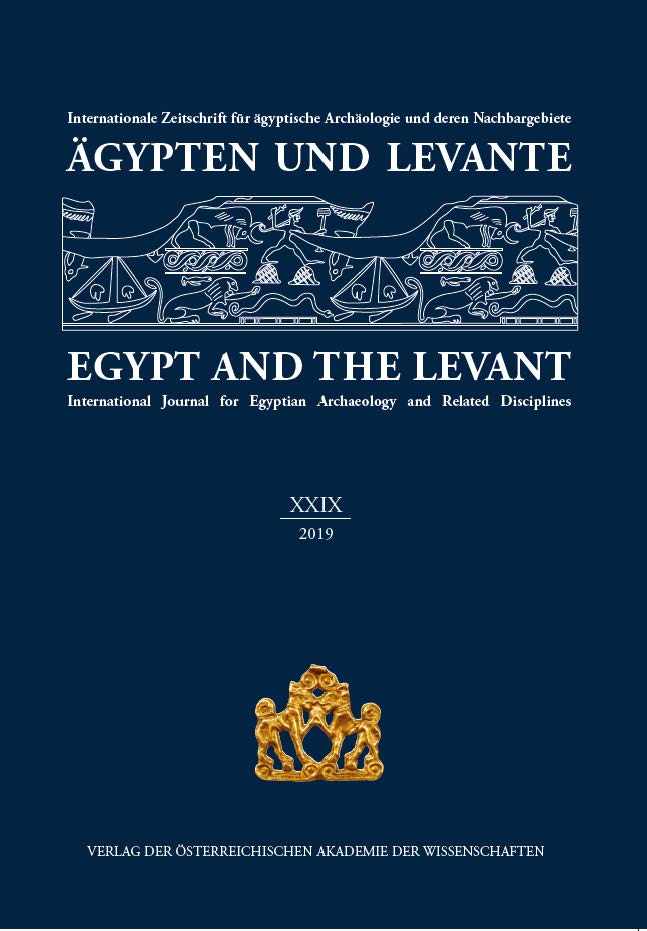
Ägypten und Levante XXIX
|
 Manfred Bietak ist emer. Professor für Ägyptologie an der Uni Wien |
|
Die Zeitschrift Ägypten und Levante wurde im Jahr 1990 von Manfred Bietak begründet, um den Forschungen zu den Kulturkontakten zwischen Ägypten und seinen Nachbarländern sowie der ägyptisch-kanaanäischen Hybridkultur, wie sie vor allem bei den österreichischen Ausgrabungen in Tell el-Dab’a zutage trat, eine Publikationsplattform zu bieten. Von Anfang an war die Zeitschrift international und interdisziplinär ausgerichtet. Das Themenfeld geht über die ursprüngliche Kernthematik weit hinaus und umfasst sowohl Vorberichte und Berichte zu archäologischen Grabungen in Ägypten und dem gesamten Vorderen Orient sowie Nubien und dem Sudan, wie auch Artikel zu allen Aspekten der ägyptischen und nahöstlichen Archäologie, Geschichts- und Kulturwissenschaft. Der Fokus liegt auf der pharaonischen Zeit, jedoch sind sowohl Beiträge zur Ur- und Frühgeschichte der genannten Regionen wie auch zur nachpharaonischen Antike möglich. Dazu wird ein weites Feld an naturwissenschaftlichen Themen abgedeckt, von Fragen der C14-Datierung über materialkundliche Untersuchungen bis hin zu archäobotanischen, archäozoologischen und anthropologischen Arbeiten. Ägypten und Levante erscheint einmal jährlich im Druck und online. Die Redaktion ist bemüht, eingereichte Artikel möglichst zeitnah zu publizieren. Beiträge sind in Deutsch, Englisch oder Französisch einzureichen. Buchbesprechungen und Rezensionen werden nicht publiziert. Alle eingereichten Artikel werden einem internationalen peer-review Verfahren gemäß den Qualitätsstandards der Österreichischen Akademie der Wissenschaften unterzogen. |
 |
Verlag der Österreichischen Akademie der Wissenschaften Austrian Academy of Sciences Press
A-1011 Wien, Dr. Ignaz Seipel-Platz 2
Tel. +43-1-515 81/DW 3420, Fax +43-1-515 81/DW 3400 https://verlag.oeaw.ac.at, e-mail: verlag@oeaw.ac.at |
|
|
|||||||||||||||||||
|
DATUM, UNTERSCHRIFT / DATE, SIGNATURE
BANK AUSTRIA CREDITANSTALT, WIEN (IBAN AT04 1100 0006 2280 0100, BIC BKAUATWW), DEUTSCHE BANK MÜNCHEN (IBAN DE16 7007 0024 0238 8270 00, BIC DEUTDEDBMUC)
|
