Robert Rollinger
is Professor of Ancient History and Ancient Near Eastern Studies at the University of Innsbruck
Irene Madreiter
is Associate Professor at the department of Ancient History and Ancient Near Eastern Studies at the University of Innsbruck
Martin Lang
is Associate Professor at the department of Ancient History and Ancient Near Eastern Studies at the University of Innsbruck
Cinzia Pappi
is affiliated Researcher at the School of Advanced Studies “Re-thinking Oriental Despotism” at the Freie Universität Berlin
|
 |
ISBN 978-3-7001-8574-1 Print Edition
ISBN 978-3-7001-9294-7 Online Edition
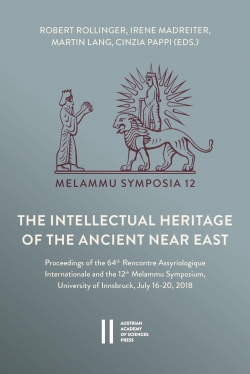
In July 2018 the 64th Rencontre Assyriologique Internationale (RAI) and the 12th Melammu Symposium were held together in Innsbruck. The topic of the conference, “The Intellectual Heritage of the Ancient Near East”, represented one of the main scientific objectives of the Melammu Project and aimed to investigate the continuity, transformation, diffusion and legacy of Ancient Near Eastern cultures from the third millennium BCE until the rise of Islam and beyond. The conference, hosting more than 200 papers, was a unique opportunity to discuss various aspects of the main theme, as well as other topics related to organized workshops. The forty papers and two keynotes in this volume provide an excellent selection of the lively discussions that took place during the conference.
…
|