Stefan Malfèr
ist ehemaliger wissenschaftlicher Mitarbeiter und Gastforscher am Institute for Habsburg and Balkan Studies der ÖAW
|
 |
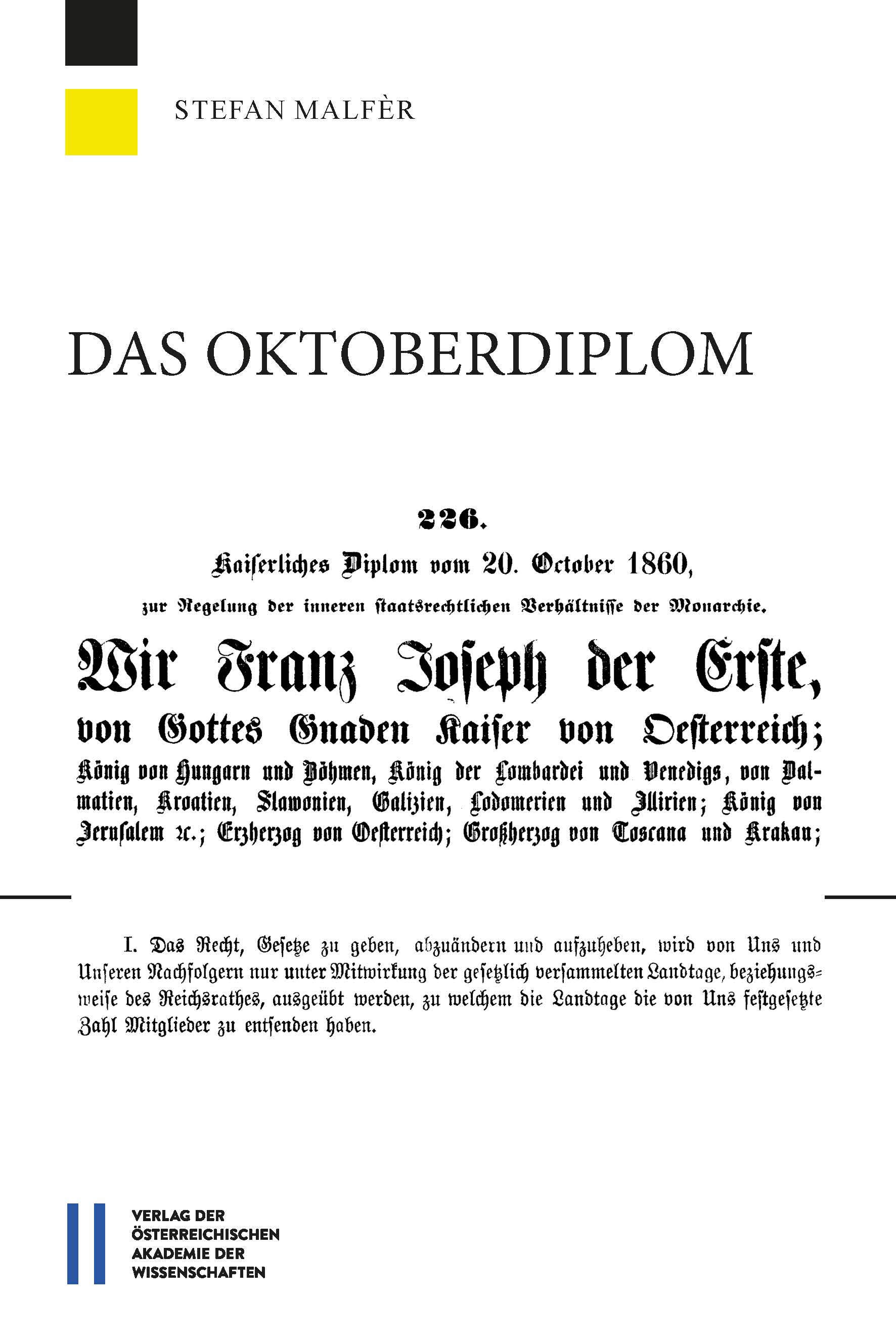
Die Studie untersucht das kaiserliche Diplom vom 20. Oktober 1860 samt den vielen gleichzeitig erlassenen Handschreiben. Obwohl das Oktoberdiplom häufig im Schatten des Februarpatents von 1861 und der Dezemberverfassung von 1867 steht, war es ein eigenständiger Staatsakt. Als Versuch, nach dem verlorenen Krieg von 1859 einen politischen Ausweg aus der Krise zu finden, verdient es eine eingehende Untersuchung. Es war ein entscheidender Schritt auf dem Weg der Habsburgermonarchie vom Neoabsolutismus zum Verfassungsstaat. Kaiser Franz Joseph I. verzichtete für sich und seine Nachfolger ein für alle Mal auf das alleinige Gesetzgebungsrecht. Gesetze konnten nur mehr gemeinsam mit den Parlamenten (Reichsrat und Landtage) erlassen werden. Das Oktoberdiplom war ein Wendepunkt im Übergang zum Länderföderalismus, zum parlamentarischen Budgetrecht und zur Überwindung ständischen Denkens. Insbesondere war es ein wichtiger Schritt auf dem Weg zum Ausgleich mit Ungarn 1867.
Ausgangspunkt der Studie war die Edition der österreichischen Ministerratsprotokolle. Es werden die Texte des Diploms und der Handschreiben rechtshistorisch und politisch analysiert. Vornehmlich wird die Prozesshaftigkeit des Geschehens dargestellt, ausgehend von der Notwendigkeit einer Antwort auf den verlorenen Krieg, die finanziellen Probleme, die Rolle des Kaisers, den Entschluss zur Einsetzung des sogenannten verstärkten Reichsrates 1860, die Gespräche mit ungarischen Politikern bis hin zur Einberufung der Landtage und des Reichsrates 1861. Indem die Studie Quellen und historiographische Rezeption systematisch zusammenführt und in ihren historischen Kontext einordnet, bietet sie die erste umfassende Monografie zum Oktoberdiplom.
…
This study examines the Imperial Diploma of 20 October 1860, together with the numerous decrees issued at the same time. The ‘Oktoberdiplom’ was overshadowed by the subsequent ‘Februarpatent’ of 1861 and the Constitution of December 1867. Nevertheless, the ‘Oktoberdiplom’, conceived as a political response to the defeat of 1859, merits detailed analysis. It constituted a crucial step in the Habsburg Monarchy’s transition from Neoabsolutism to a constitutional state. Through this act, Emperor Franz Joseph I definitively relinquished, for himself and his successors, the exclusive right of legislation. Henceforth, laws could be enacted only in cooperation with parliamentary bodies: the Reichsrat and the provincial diets. The ‘Oktoberdiplom’ marked a turning point in the transition toward provincial federalism, parliamentary budgetary authority, and the overcoming of traditional estate-based political mentalities. Above all, it represented an important step on the path to the ‘Ausgleich’ with Hungary in 1867.
This study is based on the scholarly edition of the minutes of the Austrian Council of Ministers. It analyses the texts of the ‘Oktoberdiplom’ and the accompanying decrees from legal-historical and political perspectives. The study focuses primarily on the processual character of the events: from the need to respond to military defeat and the Monarchy’s financial problems, through the role of the Emperor, the decision to establish the so-called ‘verstärkter Reichsrat’ in 1860, and the discussions with Hungarian politicians, to the convening of the diets and the Reichsrat in 1861. It brings together historical sources and historiographical reception in a systematic and contextualized overview. It is the first monograph devoted to the ‘Oktoberdiplom’.
|