 |
 |
Ethno-Cultural Diversity
|
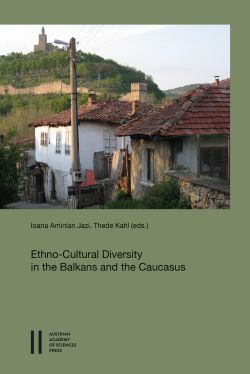 Ioana Aminian Jazi is a PhD candidate in Linguistics at the University of Vienna Thede Kahl is Professor of South Slavic and Southeast European Studies at the Friedrich Schiller University Jena. |
|
This book brings together studies from a variety of different fields in an attempt to illuminate current multidisciplinary comparative research on ethno-cultural diversity in the Balkan and the Caucasus regions. The articles cover a wide variety of topics and include studies mapping the ethnic identity, archaeology and linguistics of these two very diverse geographical areas. Particular attention is paid to aspects of ethnic identity, migration and contact between the different ethnic groups and to parallel processes resulting from the interactions between minorities and majorities in the two cultural regions. Comprehensive research dealing with the transformations of everyday culture (music, theatre, material culture) and social changes (the ratio of men to women, gender studies, socialist feminist politics, a return to patriarchal societies) has been scarce for these regions, since the focus of research was previously directed to more specific topics. The present volume aims to bridge this gap, in order to contribute to a better understanding of similarities, differences, and transformations that characterize these areas, and to encourage further in-depth comparative research. … |
 |
Verlag der Österreichischen Akademie der Wissenschaften Austrian Academy of Sciences Press
A-1011 Wien, Dr. Ignaz Seipel-Platz 2
Tel. +43-1-515 81/DW 3420, Fax +43-1-515 81/DW 3400 https://verlag.oeaw.ac.at, e-mail: verlag@oeaw.ac.at |
|
|
|||||||||||||||||||
|
DATUM, UNTERSCHRIFT / DATE, SIGNATURE
BANK AUSTRIA CREDITANSTALT, WIEN (IBAN AT04 1100 0006 2280 0100, BIC BKAUATWW), DEUTSCHE BANK MÜNCHEN (IBAN DE16 7007 0024 0238 8270 00, BIC DEUTDEDBMUC)
|

