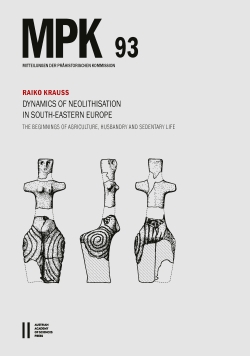
• Raiko Krauß

Dynamics of Neolithisation in South-eastern Europe

The Beginnings of Agriculture, Husbandry and Sedentary Life
Translated by Alexander Johannes Edmonds

Bild

Raiko Krauß
is professor for Middle and Southeast European Prehistory at the Tübingen University in Germany

Dieses Buch beschreibt verschiedene Szenarien des Übergangs von der nomadischen Lebensweise zur Sesshaftigkeit in Südosteuropa – der Schlüsselregion zwischen Anatolien bzw. der Ägäis und Mitteleuropa –, wo diese grundlegenden Veränderungen erstmals in Europa auftraten. Ziel dieses Buches ist es, die Komplexität des Wandels vom Jagen und Sammeln zu Ackerbau und Viehzucht in Südosteuropa, der ersten Region, die von diesem Phänomen betroffen war, aufzuzeigen und seine weitergehenden Auswirkungen zu erörtern. Es zeigt sich, dass es kein einheitliches Modell für die Ausbreitung des Neolithikums in Mitteleuropa gibt, sondern vielmehr eine Vielzahl unterschiedlicher Neolithisierungsprozesse. Die Ausbreitung der neolithischen Bauern nach Europa erfolgte hauptsächlich entlang der Donau und ihrer größeren Nebenflüsse. Abseits dieser Hauptrouten sind unterschiedliche Szenarien zu beobachten, an denen die älteren mesolithischen Populationen in unterschiedlicher Weise beteiligt gewesen sein könnten. Aus einer anfänglichen Einheitlichkeit der materiellen Kultur des südosteuropäischen Neolithikums entwickelten sich rasch lokale Traditionen. Vor dem Hintergrund der Forschungsgeschichte des Neolithikums wird gezeigt, dass der Übergang von einem Leben im Einklang mit der Natur zu deren produktiver Nutzung oder gar Ausbeutung ein tief in der abendländischen Kulturgeschichte verwurzelter Gedanke ist. Dies zeigt, dass die Zusammenfassung der vielen beobachtbaren Neuerungen unter dem Begriff „Neolithikum“ die Epoche in ihrer Gesamtheit nicht adäquat beschreibt. Vielmehr stellt das Neolithikum eine Erprobungsphase für eine Lebensweise dar, die zumindest in der westlichen Welt als zivilisatorische Errungenschaft gewertet wird. Dennoch kann die Geschichte auch ganz anders verlaufen und hat dies in verschiedenen Regionen der Welt auch getan.

Gefördert durch: Deutsche Forschungsgemeinschaft e. V. (DFG)

Verlag der Österreichischen Akademie der Wissenschaften
Austrian Academy of Sciences Press
A-1011 Wien, Dr. Ignaz Seipel-Platz 2
Tel. +43-1-515 81/DW 3420, Fax +43-1-515 81/DW 3400
https://verlag.oeaw.ac.at, e-mail: verlag@oeaw.ac.at

This book describes various scenarios of the transition from the wandering way of life to sedentarism in Southeastern Europe – the key region between Anatolia and the Aegean to Central Europe – where these fundamental changes first appeared in Europe. One important aim of this book is to demonstrate the richness and complexity of the transition of humans from hunting and gathering to agriculture and animal husbandry in Southeast Europe, the first region to be affected by this phenomenon, and to discuss its wider theoretical implications. As is now clear, there is no single paradigm for the spread of the Neolithic to Central Europe, but rather a plethora of different Neolithisation processes. The spread of Neolithic farmers to Europe was mainly along the Danube and its larger tributaries. Away from these main routes, different Neolithisation scenarios can be observed, in which the older Mesolithic populations may have participated differently. From an initial uniformity of the material culture of the Southeastern European Neolithic, local traditions rapidly developed, these displaying a wide diversity of processes and manifestations within material culture. Exploring this against the background of the history of Neolithic research, it is demonstrated that the transition from a life in harmony with nature to productive use and even exploitation thereof is a notion deeply rooted in Western cultural history. This finding demonstrates that summarising the many observable innovations under the heading of the ‘Neolithic’ does not adequately describe the epoch in its entirety. Rather, the Neolithic represents an experimental phase for a way of life which is valued, at least in the Western world, as a civilising achievement. Nevertheless, history can take a very different course, and has indeed done so in various regions of the world.

Bestellung/Order


Bild
Dynamics of Neolithisation in South-eastern Europe


ISBN 978-3-7001-8879-7
Print Edition
ISBN 978-3-7001-9346-3
Online Edition


Send or fax to your local bookseller or to:

Verlag der Österreichischen Akademie der Wissenschaften
Austrian Academy of Sciences Press
A-1011 Wien, Dr. Ignaz Seipel-Platz 2,
Tel. +43-1-515 81/DW 3420, Fax +43-1-515 81/DW 3400
https://verlag.oeaw.ac.at, e-mail: bestellung.verlag@oeaw.ac.at
UID-Nr.: ATU 16251605, FN 71839x Handelsgericht Wien, DVR: 0096385

Bitte senden Sie mir
Please send me
 
Exemplar(e) der genannten Publikation
copy(ies) of the publication overleaf


NAME


ADRESSE / ADDRESS


ORT / CITY


LAND / COUNTRY


ZAHLUNGSMETHODE / METHOD OF PAYMENT
    Visa     Euro / Master     American Express


NUMMER

Ablaufdatum / Expiry date:  

    I will send a cheque           Vorausrechnung / Send me a proforma invoice
 
DATUM, UNTERSCHRIFT / DATE, SIGNATURE

BANK AUSTRIA CREDITANSTALT, WIEN (IBAN AT04 1100 0006 2280 0100, BIC BKAUATWW), DEUTSCHE BANK MÜNCHEN (IBAN DE16 7007 0024 0238 8270 00, BIC DEUTDEDBMUC)
Bild

Dynamics of Neolithisation in South-eastern Europe - complete volume -

    Raiko Krauß

Dynamics of Neolithisation in South-eastern Europe, pp. , 2023/12/06

The Beginnings of Agriculture, Husbandry and Sedentary Life
Translated by Alexander Johannes Edmonds

doi: 10.1553/978OEAW88797

€  120,00 

incl. VAT

PDF
X
BibTEX-Export:

X
EndNote/Zotero-Export:

X
RIS-Export:

X 
Researchgate-Export (COinS)

Permanent QR-Code

doi:10.1553/978OEAW88797


Dieses Buch beschreibt verschiedene Szenarien des Übergangs von der nomadischen Lebensweise zur Sesshaftigkeit in Südosteuropa – der Schlüsselregion zwischen Anatolien bzw. der Ägäis und Mitteleuropa –, wo diese grundlegenden Veränderungen erstmals in Europa auftraten. Ziel dieses Buches ist es, die Komplexität des Wandels vom Jagen und Sammeln zu Ackerbau und Viehzucht in Südosteuropa, der ersten Region, die von diesem Phänomen betroffen war, aufzuzeigen und seine weitergehenden Auswirkungen zu erörtern. Es zeigt sich, dass es kein einheitliches Modell für die Ausbreitung des Neolithikums in Mitteleuropa gibt, sondern vielmehr eine Vielzahl unterschiedlicher Neolithisierungsprozesse. Die Ausbreitung der neolithischen Bauern nach Europa erfolgte hauptsächlich entlang der Donau und ihrer größeren Nebenflüsse. Abseits dieser Hauptrouten sind unterschiedliche Szenarien zu beobachten, an denen die älteren mesolithischen Populationen in unterschiedlicher Weise beteiligt gewesen sein könnten. Aus einer anfänglichen Einheitlichkeit der materiellen Kultur des südosteuropäischen Neolithikums entwickelten sich rasch lokale Traditionen. Vor dem Hintergrund der Forschungsgeschichte des Neolithikums wird gezeigt, dass der Übergang von einem Leben im Einklang mit der Natur zu deren produktiver Nutzung oder gar Ausbeutung ein tief in der abendländischen Kulturgeschichte verwurzelter Gedanke ist. Dies zeigt, dass die Zusammenfassung der vielen beobachtbaren Neuerungen unter dem Begriff „Neolithikum“ die Epoche in ihrer Gesamtheit nicht adäquat beschreibt. Vielmehr stellt das Neolithikum eine Erprobungsphase für eine Lebensweise dar, die zumindest in der westlichen Welt als zivilisatorische Errungenschaft gewertet wird. Dennoch kann die Geschichte auch ganz anders verlaufen und hat dies in verschiedenen Regionen der Welt auch getan.

Gefördert durch: Deutsche Forschungsgemeinschaft e. V. (DFG)

This book describes various scenarios of the transition from the wandering way of life to sedentarism in Southeastern Europe – the key region between Anatolia and the Aegean to Central Europe – where these fundamental changes first appeared in Europe. One important aim of this book is to demonstrate the richness and complexity of the transition of humans from hunting and gathering to agriculture and animal husbandry in Southeast Europe, the first region to be affected by this phenomenon, and to discuss its wider theoretical implications. As is now clear, there is no single paradigm for the spread of the Neolithic to Central Europe, but rather a plethora of different Neolithisation processes. The spread of Neolithic farmers to Europe was mainly along the Danube and its larger tributaries. Away from these main routes, different Neolithisation scenarios can be observed, in which the older Mesolithic populations may have participated differently. From an initial uniformity of the material culture of the Southeastern European Neolithic, local traditions rapidly developed, these displaying a wide diversity of processes and manifestations within material culture. Exploring this against the background of the history of Neolithic research, it is demonstrated that the transition from a life in harmony with nature to productive use and even exploitation thereof is a notion deeply rooted in Western cultural history. This finding demonstrates that summarising the many observable innovations under the heading of the ‘Neolithic’ does not adequately describe the epoch in its entirety. Rather, the Neolithic represents an experimental phase for a way of life which is valued, at least in the Western world, as a civilising achievement. Nevertheless, history can take a very different course, and has indeed done so in various regions of the world.